
Forex Broker Spreads Comparison: Finding Your Edge in a Competitive Market
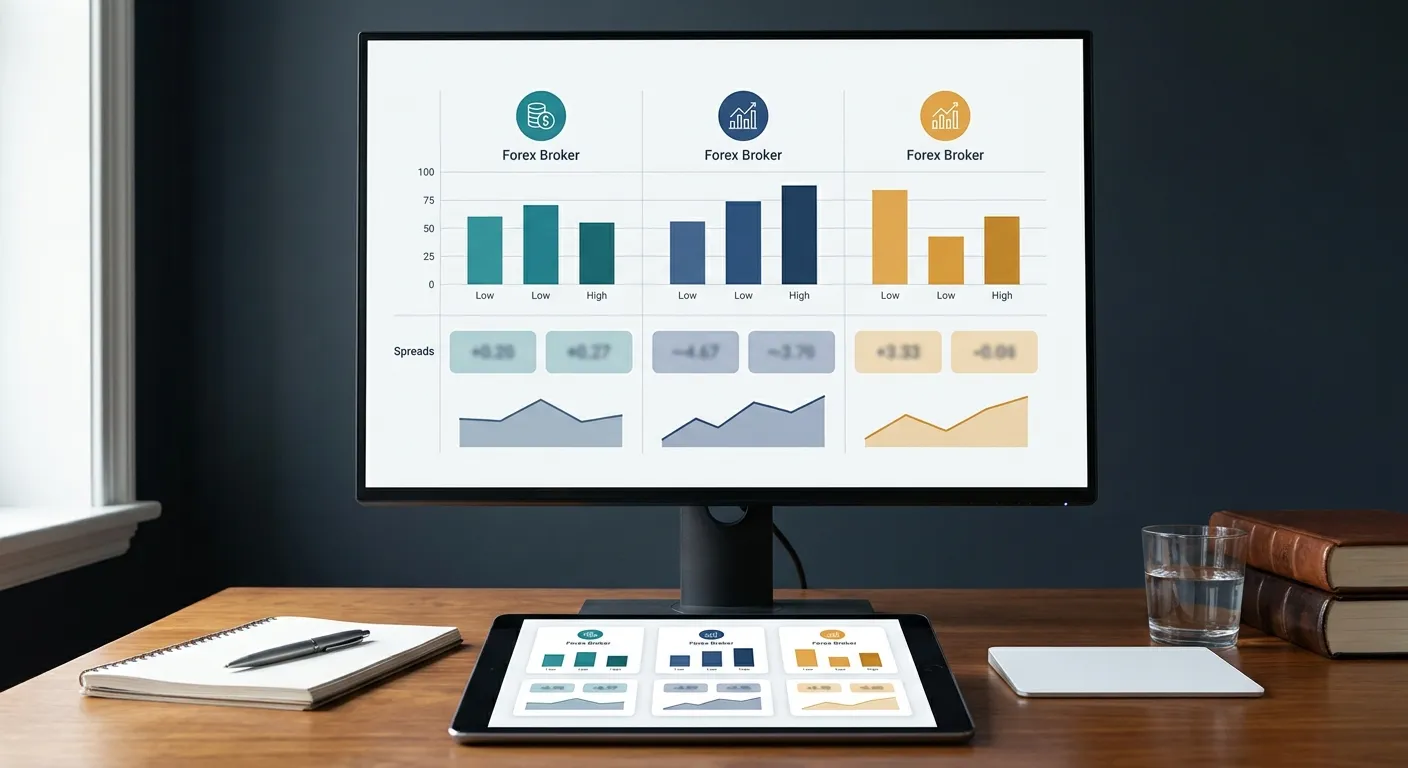
In the dynamic and intensely competitive global foreign exchange market of 2025-2026, over 3,400 active forex brokers vie for attention. Mastering the forex broker spreads comparison is fundamental for any trader aiming to optimize trading costs and enhance profitability. With average daily FX turnover reaching US $9.6 trillion, success often lies in understanding subtle yet significant differences in how brokers structure their fees. At Forex Brokers Net, we believe a transparent and comprehensive methodology is crucial for navigating this landscape. This ensures you select a broker that truly aligns with your financial objectives.
Understanding Forex Spreads: The Core of Trading Costs
Spreads represent the difference between the bid (buy) and ask (sell) price of a currency pair. Effectively, they are the cost of executing a trade. This seemingly small detail can accumulate significantly, especially for active traders. Understanding its nuances is paramount.
Fixed vs. Variable Spreads
- Fixed Spreads: These remain constant regardless of market volatility. While predictable, they tend to be slightly wider than average variable spreads. They might not be available during major news events or extreme market conditions. Fixed spreads offer certainty, which can appeal to new traders.
- Variable Spreads: These fluctuate based on market supply and demand, liquidity, and volatility. During calm market conditions, they can be very tight, offering lower trading costs. However, they can widen significantly during periods of high volatility or major economic announcements, potentially increasing unexpected costs.
ECN vs. Standard Accounts and Spread Implications
The type of account you choose also dictates your spread experience. Consequently, this choice impacts your overall trading expenses.
- ECN (Electronic Communication Network) Accounts: These typically offer raw, interbank spreads that are extremely tight, often starting from 0 pips on major pairs. Brokers offering ECN accounts usually charge a separate, transparent commission per lot traded. This model is favored by professional traders due to its direct market access and lower latency.
- Standard Accounts: These often feature wider, commission-free spreads. The broker’s compensation is built directly into the spread, making them simpler for many beginners. However, they can be more costly for high-volume traders.
Beyond Spreads: Evaluating Trading Platforms and Tools
While spreads are critical, the functionality of a broker’s trading platform and the availability of robust tools significantly impact your trading experience and efficiency. The market’s evolution, driven by technological advancements, means traders expect sophisticated, user-friendly interfaces.
Popular Trading Platforms
MetaTrader 4 (MT4) and MetaTrader 5 (MT5) remain industry standards. They are renowned for their comprehensive charting tools and extensive technical analysis indicators. Many traders prefer these platforms due to their familiarity and vast customization options. Furthermore, many brokers offer proprietary platforms, which can provide unique features tailored to their services. For example, some proprietary platforms integrate advanced risk management tools or social trading functionalities. Therefore, a thorough evaluation of platform features is essential.
Essential Trading Tools
A broker’s offering of trading tools can significantly enhance your decision-making. Look for features like advanced charting packages, economic calendars, and real-time news feeds. Additionally, some brokers provide sentiment indicators, backtesting capabilities, and automated trading options. These tools help traders identify opportunities and manage risk effectively. For instance, an integrated economic calendar ensures you are aware of upcoming market-moving events. Consequently, you can adjust your trading strategy accordingly.
Factors Influencing Forex Spreads
Several factors beyond the broker’s business model influence the spreads you encounter. Understanding these elements can help you anticipate market conditions and make informed decisions.
Market Volatility and Liquidity
High market volatility often leads to wider spreads. During periods of significant economic news or geopolitical events, price movements become erratic. This reduces liquidity, causing brokers to widen spreads to mitigate their own risk. Conversely, high liquidity, typically seen in major currency pairs like EUR/USD, results in tighter spreads. This is because there are more buyers and sellers, making it easier for brokers to offset their positions.
Currency Pair Popularity
Major currency pairs, such as EUR/USD, GBP/USD, and USD/JPY, consistently exhibit the tightest spreads. This is due to their immense trading volume and high liquidity. Exotic pairs, on the other hand, are traded less frequently. They therefore have lower liquidity and consequently much wider spreads. Traders should always consider the typical spread for their chosen currency pairs when comparing brokers. This approach helps in accurate cost assessment.
Time of Day and Trading Sessions
Spreads can also vary significantly depending on the time of day. During peak trading hours, when major financial centers like London and New York are active, liquidity is highest, and spreads are typically tightest. Conversely, during off-peak hours or overnight, when liquidity is lower, spreads tend to widen. Traders operating across different time zones should be mindful of these fluctuations. This awareness helps in optimizing entry and exit points.
Conducting an Effective Forex Broker Spreads Comparison
A systematic approach to comparing forex broker spreads is crucial for identifying the most cost-effective options. Consider these steps to ensure a comprehensive evaluation.
Step-by-Step Comparison Methodology
- Identify Your Trading Style: Are you a scalper, day trader, or long-term investor? Your trading frequency and holding periods will dictate whether fixed or variable spreads are more suitable.
- Focus on Major Pairs: When performing a forex broker spreads comparison, prioritize the spreads on the currency pairs you trade most frequently. These will have the most significant impact on your overall costs.
- Consider Commissions: For ECN accounts, factor in the commission per lot. Combine this with the raw spread to calculate the true cost per trade.
- Check Average Spreads: Many brokers publish average spreads for their major pairs. Review these figures, but also consider real-time spreads during various market conditions.
- Read Reviews and Testimonials: Look for feedback from other traders regarding a broker’s spread consistency and transparency. This provides valuable insights.
Tools and Resources for Comparison
Several online tools and comparison websites can assist in your forex broker spreads comparison. These platforms often aggregate data from multiple brokers, allowing for side-by-side analysis. However, always verify the information directly on the broker’s website. Market data providers also offer historical spread data, which can be useful for understanding typical fluctuations. Furthermore, demo accounts are invaluable. They allow you to experience real-time spreads without risking capital. This practical experience is vital for a realistic assessment.
Beyond Spreads: A Holistic Broker Evaluation
While a detailed forex broker spreads comparison is essential, it’s only one piece of the puzzle. A truly informed decision requires evaluating a broker on multiple fronts. This ensures a secure and efficient trading environment.
Regulation and Security
Choosing a regulated broker is paramount. Regulatory bodies like the FCA (UK), ASIC (Australia), and CySEC (Cyprus) enforce strict standards, protecting client funds and ensuring fair trading practices. Always verify a broker’s regulatory status on the regulator’s official website. This due diligence safeguards your investments. For more information on regulatory bodies, consider visiting the Financial Conduct Authority website.
Customer Support and Service
Reliable customer support is crucial, especially when dealing with time-sensitive trading issues. Assess the availability (24/5 or 24/7), responsiveness, and quality of a broker’s support team. Look for multiple contact methods, such as live chat, email, and phone. A broker with excellent support demonstrates a commitment to its clients. This can significantly enhance your trading experience.
Deposit and Withdrawal Options
Review the available deposit and withdrawal methods, including processing times and any associated fees. Ensure that the options are convenient and secure for your location. Slow or expensive withdrawal processes can be a significant deterrent. Furthermore, transparent fee structures for these transactions are a sign of a reputable broker.
Educational Resources
Especially for newer traders, access to quality educational resources is invaluable. Many brokers offer webinars, tutorials, articles, and market analysis. These resources can help you improve your trading skills and stay informed about market developments. For instance, understanding complex trading strategies becomes easier with well-structured educational content. A commitment to trader education sets good brokers apart.
Additional Costs and Fees
Beyond spreads and commissions, be aware of other potential costs. These might include inactivity fees, overnight (swap) fees for holding positions past a certain time, and withdrawal fees. Read the broker’s terms and conditions carefully to avoid unexpected charges. A comprehensive understanding of all fees is vital for accurate cost calculation. This forms an important part of any effective forex broker spreads comparison.
The Impact of Technology on Spreads
Technological advancements have profoundly impacted how spreads are offered and managed in the forex market. High-speed execution, advanced aggregation, and improved connectivity have all contributed to tighter spreads and more efficient trading conditions.
Algorithmic Trading and Market Making
Algorithmic trading systems employed by liquidity providers and brokers continuously monitor market conditions. They adjust spreads in real-time. This ensures that quoted prices accurately reflect current supply and demand. Furthermore, sophisticated market-making algorithms can quickly offset imbalances, contributing to tighter and more stable spreads. This technological edge benefits all traders.
Connectivity and Latency
The speed of trade execution directly influences the effective spread a trader experiences. Brokers with robust technological infrastructure and low-latency connections to liquidity providers can offer more competitive spreads. This is because they can execute trades faster and with less slippage. Traders should consider a broker’s execution speed as a critical factor. For further reading on market microstructure and execution, consider resources like the Bank for International Settlements.
Conclusion: Optimizing Your Trading Edge
In conclusion, mastering the forex broker spreads comparison is a cornerstone of profitable forex trading. It involves understanding the various types of spreads, the implications of different account models, and the many factors that influence these costs. However, a truly effective selection process extends beyond just spreads. It encompasses a holistic evaluation of a broker’s regulatory standing, platform technology, customer support, and overall fee structure. By meticulously researching and comparing these elements, traders can confidently choose a broker that not only offers competitive spreads but also provides a secure, efficient, and supportive environment for their trading journey. Your diligence in this process will undoubtedly contribute to finding your edge in the highly competitive forex market.
FAQ
What are the primary types of forex spreads?
The two main types are fixed spreads and variable spreads. Fixed spreads remain constant, offering predictability, while variable spreads fluctuate with market conditions, potentially offering tighter rates during calm periods but widening during volatility.
How do ECN accounts affect trading costs?
ECN accounts typically provide raw, very tight spreads, often starting from 0 pips. However, they usually involve a separate commission charged per lot traded. This model is generally favored by experienced traders.
Why do spreads widen during major news events?
During significant news events, market volatility increases, and liquidity often decreases. Brokers widen spreads to mitigate their own risk in these uncertain conditions, as price movements become more unpredictable.
What should I consider besides spread when choosing a broker?
Beyond spread costs, consider the broker’s regulatory status, the quality of their trading platform, customer support responsiveness, available deposit/withdrawal methods, and any other fees like inactivity or swap charges. A comprehensive review ensures a reliable trading partner.
Can I test a broker’s spreads before committing funds?
Yes, most reputable forex brokers offer demo accounts. These allow you to practice trading with virtual funds and experience real-time market conditions, including the broker’s live spreads, without any financial risk. This is an excellent way to perform a practical forex broker spread evaluation.
Explore more: More from Forex Brokers Net
