
Online trading spread incredibly quickly since the Internet made connecting buyers and sellers easier and faster. Smartphones pushed things even further, as they enabled trading on the go. Infrastructure is critical in attracting and retaining customers. The trading platform is the tool traders use to instruct the broker what to sell and buy, when, and in what volume. Also, it is used by traders to conduct technical analysis studies and back-test various strategies for automated trading.
Therefore, trading platforms are vital for forex brokers and traders. Brokers try to improve it and constantly offer the best conditions to traders. On the other hand, traders have high expectations regarding the platform they use as their trading success depends, to some extent, on the trading platform too.
There are several online trading platforms dedicated to retail traders. In the following paragraphs, we will present a list of the most popular ones, a short description, and the pros and cons of using each platform.
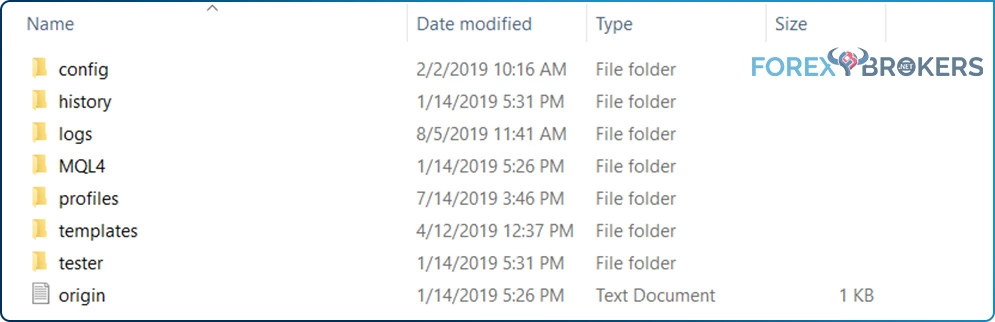
MetaTrader 4 is, by far, the most famous and popular forex trading platform among retail traders. Its simplicity attracts traders. But that does not mean it has limited capabilities. The installation process is straightforward and user-friendly. The platform comes with a basic set of indicators, but one can import any indicator as long as it is built according to the MQL instructions. Therefore, it can be customized.
Also, it supports automated trading. Traders can build their EAs and then import them on the platform. MetaTrader4 makes it easy to run them and even back-test the results for long periods. Hedging is allowed on this version of MetaTrader. This means traders can simultaneously open long and short trades on a currency pair. At times, hedging protects the trading account from unnecessary drawdowns, and MetaTrader 4 allows such strategies.
Charts can be customized, too. Traders can opt from three types – line, bar, and candlesticks, but can also import EAs that help transform the charts into other chart types. Virtually, there is nothing that the MetaTrader 4 cannot do for the retail trader.
Then, one might ask – why is there a need for the MetaTrader 5 platform?
MetaTrader 5 was born on the need for a different platform suitable for jurisdictions where regulation had certain conditions to be met by brokers. For example, in the United States, hedging in the forex market is prohibited. Hence, to address the needs of brokers offering services in the United States, MetaTrader5 appeared on the market.
It is a great platform, mainly similar to the MetaTrader4, but with additional features like the one mentioned above. One would say that it is an upgrade of the MT4, but the truth is that even so many years after the MT5 appeared, many forex traders still prefer the MT4.
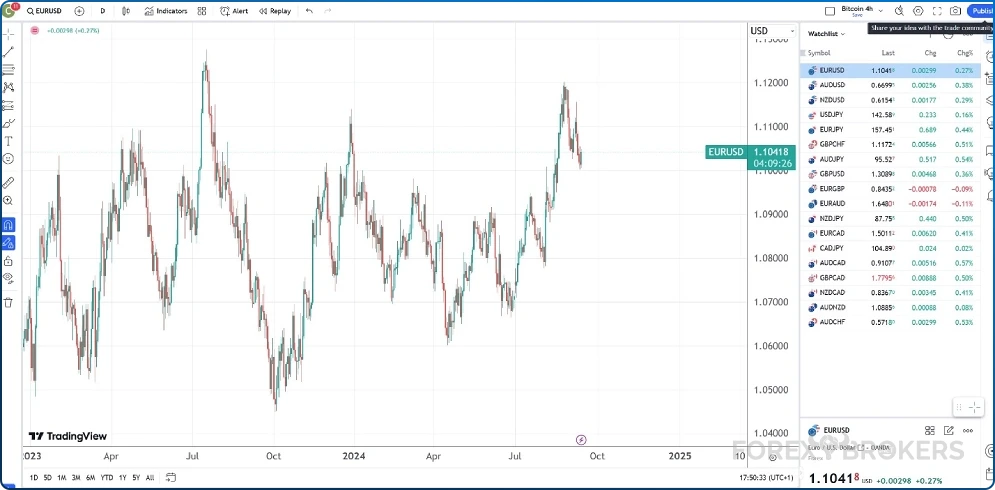
TradingView has grown spectacularly in the past years. From just another third-party tool, it quickly became the reference to an industry already crowded with numerous trading platforms. Nowadays, TradingView also offers brokerage services, so traders can connect their accounts at various brokers with their platform and actively trade from TradingView.
Returning to the TradingView platform, we see it is more than just a trading platform. Sure enough, all the currency pairs are there, from the classic majors, such as EUR/USD or USD/JPY, to exotic currency pairs. The platform also features numerous markets, from fixed income to stock market indices and from cryptocurrencies to commodities.
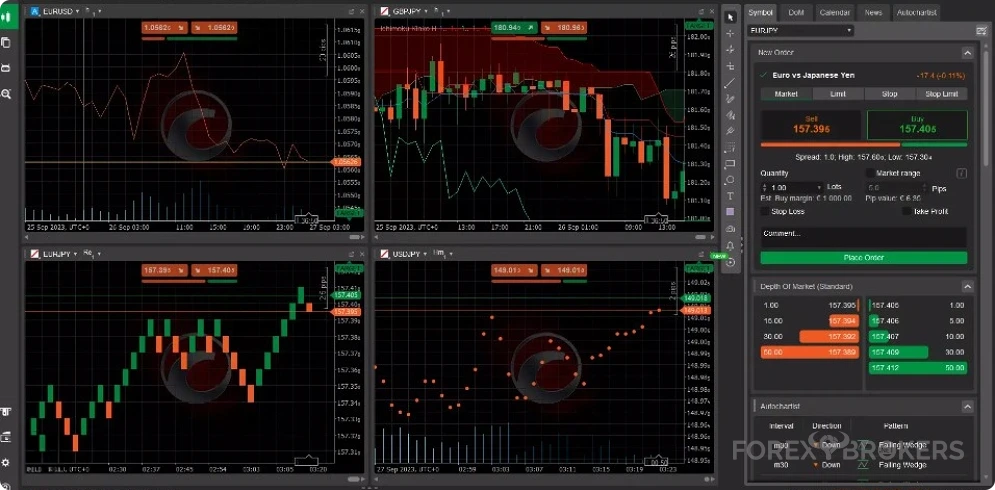
cTrader belongs to a London-based company and is primarily used by ECN (Electronic Communications Network) brokers. It was first launched with FxPro before being offered by other brokers.
It quickly became adopted by the retail community, and now it is a choice for many. Brokers want to attract as many customers as possible, stand out, and offer multiple trading platforms to their clients.
cTrder is one of those options, and one should not be surprised to see it provided alongside MT4 and MT5 platforms.
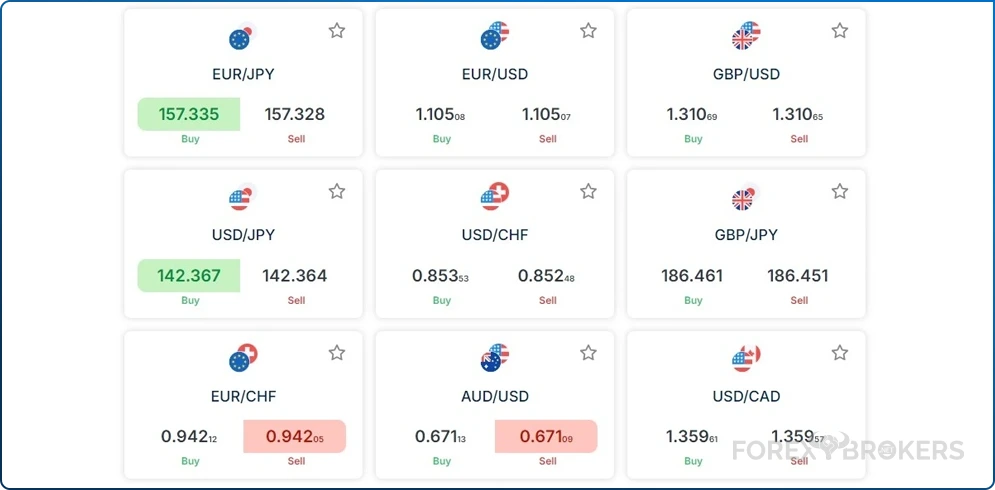
ZuluTrade describes itself as a social intelligence platform that helps traders invest intelligently. Social trading is a form of copy trading, where traders follow other successful traders and copy their trades instantly when they occur.
The copying is made via ZuluTrade’s trading platform. The company is active in over 150 countries and is regulated globally.
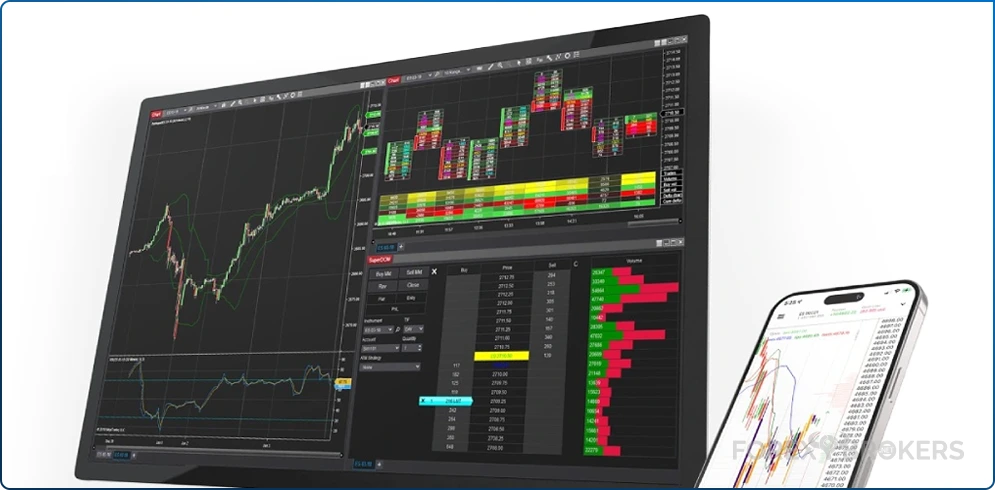
NinjaTrader is known for its powerful futures trading platform. It comes in three versions: NinjaTrader Desktop, NinjaTrader Web, and Mobile Apps. Nevertheless, the trading platform supports spot forex trading too.
For this, you need to install the desktop version, and from the control center window, under the connections tab, go to configure. There, you can find the forex currency pairs.
Various companies provide third-party tools that supplement financial market participants with tools to complement their analysis. Mainly, they enable computational power and cutting-edge analysis.
AutoChartist
Autochartist came to market ten years ago. It provides brokers with advanced analysis tools and technology that scans global markets for opportunities and possible trading setups. Over five million traders around the world enjoy the software.
It aims to be one of the most complete third-party tools, diving into technical, sentiment, macroeconomic, fundamental, statistical, and volatility analysis.
Trading Central
Trading Central offers investment insights. It has been active on the market for over a century and serves over 100 million users. It provides insights into fundamental and technical analysis, news and sentiment, and options insights.
Choosing the right one from the best online trading platforms is not an easy task. First, not all platforms are the same. Second, not all traders need the same features. Third, not all tools are required. Therefore, the trader must know their expectations before choosing a trading platform. For example, a technical trader uses a trading platform much more than a fundamental one.
The fundamental trader only needs the platform to send the trades’ instructions and set the risk management parameters. However, technical traders mostly use the platform to analyze past price behavior. This daunting task consumes time and requires a lot of resources before reaching a conclusion on whether to buy or sell. As such, for technical traders, the trading platform and what it features is more important than for fundamental traders.
A good trading platform should have numerous technical indicators, such as trend and oscillators. Other tools are also recommended, such as Fibonacci ratios or pattern recognition. It should also be capable of handling automated trading. Additionally, it’s essential to choose platforms that are regulated by some of the most reliable forex authorities, such as the Financial Conduct Authority (FCA) in the UK, the Australian Securities and Investments Commission (ASIC), and the Commodity Futures Trading Commission (CFTC) in the US. These regulators ensure that platforms operate securely and transparently.
The app should be the trading platform’s extension. It should be easy to connect to and use as traders would monitor their positions on the go.
It is best to avoid web-based forex trading platforms. They are usually slow and have limited resources. Another thing to consider is the mobile trading app. It acts as an extension of the desktop-based platform, so you want to avoid a app that does not function properly.
Most brokers dedicated to retail traders have opted for trading platforms already available, like the MetaTrader4 and MetaTrader5. The advantages of using them are their robustness, viability, and ease of use.
However, some brokerage houses have decided to build their own platforms. They have the resources to develop and improve them over the years. The final decision to pick the right one from top trading platforms belongs to the trader. For beginners into forex traders, MetaTrader 4 is the perfect choice. It even allows hedging.
More experienced traders might want to try other, more sophisticated platforms. It doesn’t mean that they will improve your profitability. In the end, it is the trader’s analysis and risk appetite that are responsible for success in financial markets.
This is a difficult question to answer as it depends on your level of experience and knowledge. If you are new to the world of forex trading, it may take some time to learn the ropes.
However, if you have some experience in other financial markets, you may be able to pick up forex trading more quickly. Ultimately, it will take as long as it takes for you to feel comfortable with the market and your trading strategies.
Again, this is a difficult question to answer definitively. There are many reputable forex brokers out there, and it really depends on your individual needs and preferences.
Some things you may want to consider when choosing a broker include the size of their spreads, the quality of their customer service, and the fees they charge.
No, forex trading is not a gamble. While there is always some element of risk involved in any financial transaction, forex trading can be very lucrative and rewarding if done correctly.
Yes, forex trading can be a career. Many people around the world make a living by buying and selling currencies on the forex market.
However, it is essential to note that success in forex trading requires hard work, dedication, and discipline.
Yes, you can learn forex by yourself. There are several resources available online and in books that can teach you about the basics of forex trading.
However, it is always advisable to consult a professional before making any significant decisions in the market.
No, a forex broker cannot steal your money as long as it is regulated. However, it is essential to be aware of the risks involved in any financial transaction and to choose a reputable and trustworthy broker.
In most cases, yes, forex trading is subject to taxation. However, there may be exceptions depending on your country of residence and the regulations.
It is always advisable to consult with a tax professional before making any decisions about your taxes.
Brokers make money by charging fees for their services, such as commissions or spreads. They may also make money from interest on margin accounts or by selling products and services to their clients.
This depends on a number of factors, such as the broker you choose and the type of account you open. Most brokers require a minimum deposit to open an account, and some may also charge additional fees for certain services.